Vacations For Less Destination Weddings
Destination Wedding Travel Planning for Less
Vacations For Less Destination Weddings
Destination Wedding Travel Planning for Less
Ultimate Travel Destination Wedding Blog: Top Venues, Resorts, and Tips
How Many Guests Actually Come to a Destination Wedding? Realistic RSVP Rates for 2026
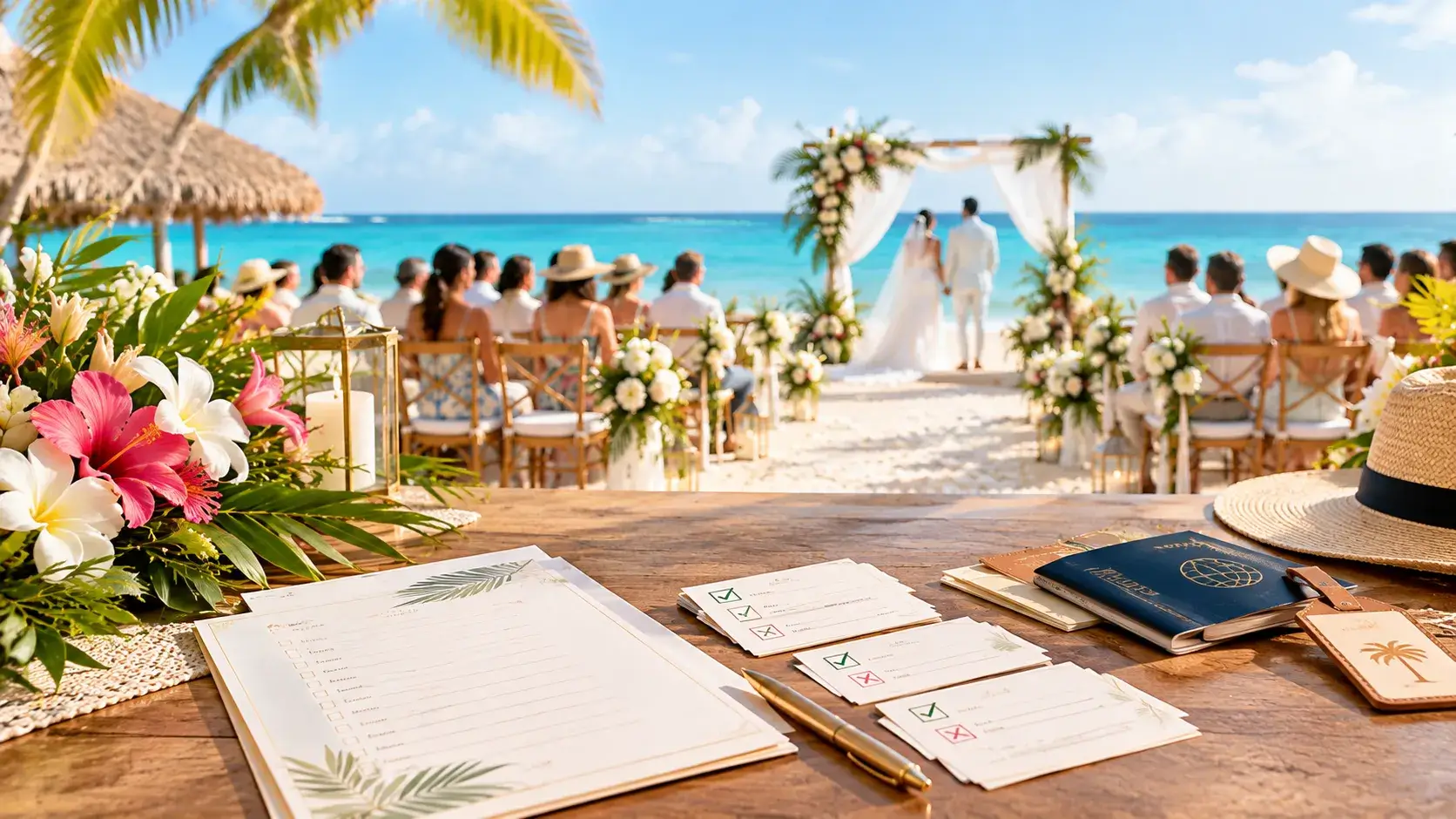
One of the most common planning mistakes couples make is inviting a local-wedding-sized guest list and expecting a local-wedding-sized turnout. Destination weddings work differently — travel cost, time off work, and passport logistics all filter who actually shows up, and the gap between "invited" and "attending" is much wider than most couples expect. Getting this number right matters beyond emotions: it's what your room block, your package tier, and your free-package eligibility are actually built around.
Updated September 2026 · Destination Wedding Planning · CST #2002477-40
Why Destination Weddings Get Fewer "Yes" Replies
A local wedding asks guests for an evening. A destination wedding asks for flights, days off work, a hotel stay, and often a passport — a meaningfully bigger commitment that a real share of invited guests simply can't make, regardless of how much they want to be there. This isn't a reflection of how loved the couple is; it's a structural reality of what's being asked, and planning around it — rather than hoping for a local-wedding turnout — is what keeps a room block and a package tier from becoming a headache later.
Realistic Attendance Rates
In practice, this means a couple inviting 100 guests to a destination wedding should plan for somewhere between 40 and 70 actually attending — not 80 or 90. This is the single biggest reason destination wedding room blocks and package tiers (many of which are priced or unlocked by guest count) so often end up smaller than couples first assume.
Attendance by Relationship to the Couple
The 50–60% overall average hides a lot of variation. Attendance clusters heavily by how close someone is to the couple:
| Guest Category | Typical Attendance | Notes |
|---|---|---|
| Immediate family & wedding party | 90–100% | These guests plan their year around the date; near-universal attendance is standard |
| Close friends | 70–85% | High priority for most, but travel cost and timing can still cause regrets |
| Extended family (aunts, uncles, cousins) | 40–60% | Highly dependent on existing closeness and travel cost tolerance |
| Coworkers & casual friends | 15–30% | Often invited out of courtesy; lowest attendance category by a wide margin |
| "B-list" or plus-ones without a close tie | 10–20% | Frequently the first RSVPs to decline once the location and cost are clear |
What Moves the Number Up or Down
Trip Cost
The single biggest lever. A lower-cost destination and a resort with a range of room categories widens who can afford to say yes.
Flight Distance & Direct Routes
Destinations with more direct flight options from major U.S. cities see meaningfully better attendance than harder-to-reach locations.
Advance Notice
A save-the-date sent 9–12 months out gives guests time to request time off and budget — short notice disproportionately hurts extended family and casual-friend attendance.
Timing
Weddings scheduled around major holidays or school breaks compete with guests' existing travel plans and budgets, which can lower attendance.
Family-Friendly vs. Adults-Only
Adults-only resorts can reduce attendance among guests who can't arrange childcare for an extended trip — a real trade-off against the atmosphere benefits.
Guest List Composition
A guest list weighted toward immediate family and close friends will outperform the average; one weighted toward casual acquaintances will underperform it.
Planning Your Room Block & Package Around Realistic Numbers
Most all-inclusive wedding packages are tiered by guest count, and many free-package thresholds are unlocked by room-night totals — both of which mean your actual attendance number, not your invited number, is what determines your resort experience.
- Build your invite list first, then estimate attendance separately — apply the relationship-based rates above rather than a single flat percentage across your whole list.
- Pick a package tier for your estimated attendance, not your invited count — most resort packages price and structure around guest ranges (10, 20, 50, 79 guests, etc.), and overshooting the tier you actually need adds cost without benefit.
- Track RSVPs against your room block as they come in — this is when most couples discover they're short of or over a qualifying room-night threshold for a complimentary package.
- Confirm your package's per-person overage fee before finalizing your invite list, in case attendance runs higher than expected.
- Don't wait until the RSVP deadline to gauge interest — informal early conversations with close family and the wedding party can validate your estimate months earlier.
Check Guest Capacity by Destination
Once you have a realistic attendance estimate, compare it against actual venue capacities — VFL's "Best Resorts" guides for each destination include guest-count tables for every property:
Frequently Asked Questions
Get Help Sizing Your Guest List & Package
Tell us your invited guest count and destination preference. We'll help you estimate realistic attendance and match you to the right package tier and room block size — free, within 24 hours.
No agency fees · No obligation · Response within 24 hours
Prefer to talk? Call 1-800-200-2423 · Mon–Fri, 9AM–5:30PM PT